


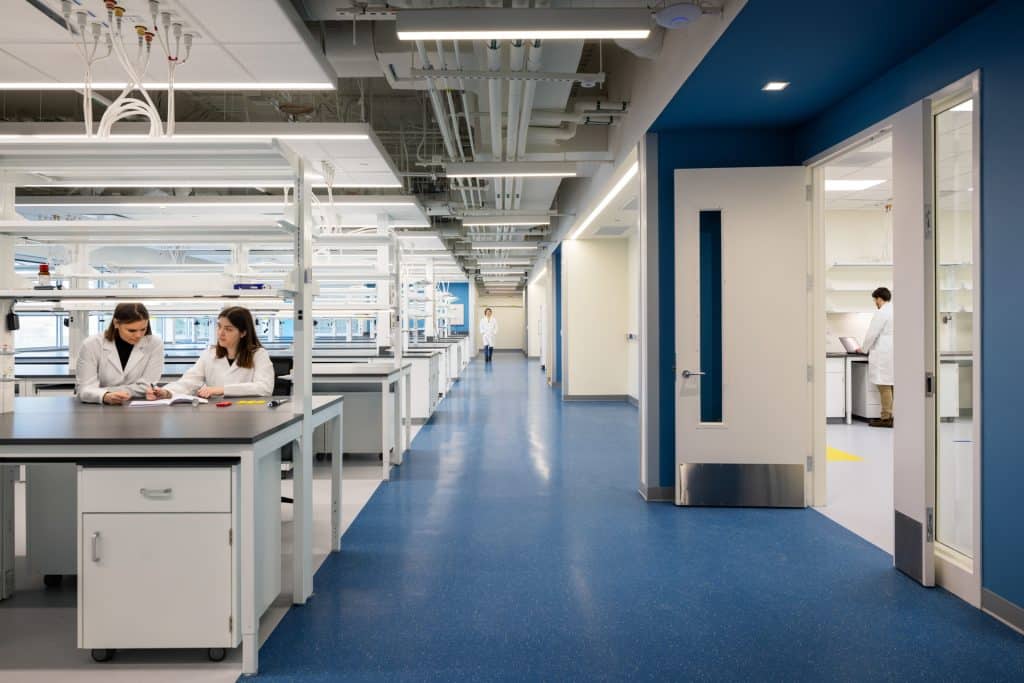
The life sciences sector continues to evolve at a rapid pace, driven by innovation, research funding, and growing demand for advanced facilities. As scientific discovery accelerates, the spaces where that work happens must keep up. For owners and developers, understanding current lab construction trends is critical—not just to deliver today’s projects successfully, but to ensure facilities remain functional, efficient, and competitive well into the future.
The Push for Flexible, Adaptable Lab Spaces
One of the most significant shifts in lab construction is the growing demand for flexibility. Research programs change quickly, and facilities must be able to adapt without requiring major renovations. From a construction standpoint, this often means accommodating multi-use rooms, modular components, and infrastructure that allows spaces to be reconfigured with minimal disruption. These strategies help owners respond to changing research needs while protecting their long-term investment. They also support sustainability by extending the useful life of lab spaces and reducing the need for future demolition and rebuilds.
Rising MEP Intensity and Infrastructure Demands
Lab and life science facilities are among the most MEP-intensive buildings to construct. Increased airflow requirements, redundant systems, and higher power demands are now the norm. These infrastructure needs have a direct impact on project cost, coordination, and schedule. At the same time, they create opportunities for smarter system design, such as energy recovery systems, high-efficiency mechanical equipment, and optimized airflow strategies that balance performance with energy use. Careful sequencing and early planning are essential to ensure these systems perform reliably while supporting long-term operational efficiency.
Supply Chain Shifts for Specialized Materials and Equipment
Global supply chain challenges have reshaped how lab projects are planned and delivered. Specialized materials and equipment, such as mechanical components, lab casework, and building systems, often come with extended lead times. Increasingly, owners are also considering lower-impact construction materials and products with improved environmental profiles. Successful projects now depend on early procurement strategies and close coordination with trusted trade partners to mitigate risk, manage material availability, and align sustainability goals with schedule and budget realities.
Sustainability, Energy Efficiency, and Carbon Reduction
Sustainability expectations continue to rise across the life sciences industry. While laboratories are inherently energy-intensive, owners are adopting strategies that reduce environmental impact without compromising performance. These include energy recovery systems, smart airflow design that adjusts ventilation based on actual use, and material selections that support durability and lower embodied carbon. Thoughtful construction planning plays a critical role in integrating these strategies, helping owners manage operational costs while supporting long-term sustainability and carbon reduction goals.
Why Early Planning Matters
These trends directly influence budgeting, scheduling, and overall project planning. Early involvement of an experienced CM/GC allows teams to evaluate system options, model costs accurately, identify sustainability opportunities, and address risks before they impact construction. This proactive approach leads to better alignment between design intent, operational performance, and long-term facility goals.
How EDiS Is Meeting the Moment
EDiS has refined its preconstruction approach, strengthened trade partner collaboration, and applied lessons learned from complex lab projects to meet these evolving demands. By staying ahead of industry trends, including flexibility, infrastructure intensity, supply chain challenges, and sustainability, EDiS helps clients deliver lab facilities that are resilient, efficient, and built for the future.
As life science research continues to advance, partnering with a construction team that understands both performance demands and sustainability expectations is essential to achieving predictable, high-performing results.


