


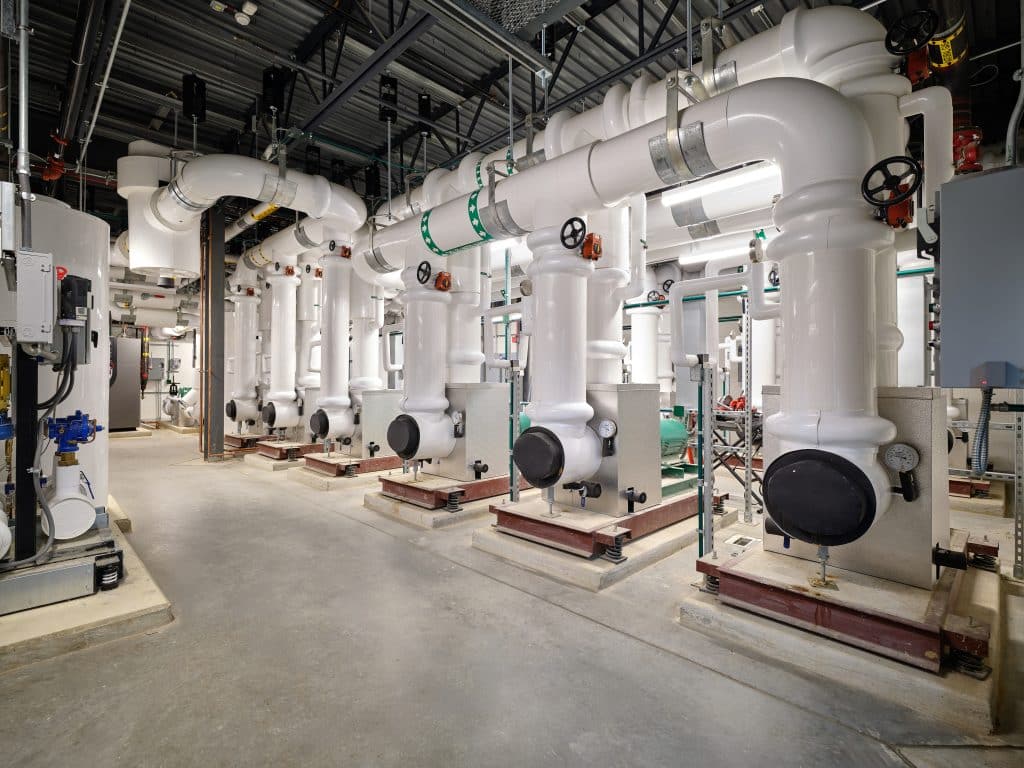
When temperatures begin to drop, building owners and facility managers face an important seasonal transition: switching mechanical systems from air conditioning to heating. While changing a thermostat setting may seem simple, a successful transition can involve much more—especially when a building is heading into its first winter of operation.
Heating systems, controls, piping, equipment, and building-envelope components all need to work together as intended. Taking the time to inspect, prepare, and understand how your building is designed to transition between seasons can improve occupant comfort, reduce energy use, protect equipment, and help prevent costly winter emergencies.
Know How Your Building Changes Seasons
One of the first things facility teams should understand is how the building’s HVAC system transitions from cooling to heating. Not every building can simply turn on the heat for a test run while the air conditioning remains available.
A major factor is whether the building uses a two-pipe or four-pipe hydronic system.
In a two-pipe system, the same piping serves both heating and cooling. During warmer months, chilled water circulates through the system. When the building changes over to heating, that piping is switched to hot water. Because the same piping is being used for both functions, the building generally must be in either heating mode or cooling mode—it cannot provide both at the same time.
That makes the timing of the seasonal changeover particularly important. An unusually warm fall afternoon after the system has been changed to heating, for example, can create comfort challenges because cooling may no longer be available without changing the entire system back.
A four-pipe system, on the other hand, has separate piping for chilled water and hot water. This provides much greater flexibility because heating and cooling can be available at the same time, allowing one area of the building to call for heat while another needs cooling, depending on how the system and controls are designed.
Understanding which type of system you have helps set realistic expectations for seasonal startup and testing. In a two-pipe building, it may not be practical to “pre-start” the heat weeks in advance without committing the building to heating mode. Instead, facility teams should coordinate the changeover carefully, monitor the forecast, complete as much preventive maintenance as possible before the switch, and understand the steps required to move from one mode to the other.
This is particularly important during the fall and spring, when outdoor temperatures can swing dramatically from morning to afternoon.
Do Not Wait Until the Last Minute to Prepare
Even if your building cannot fully operate its heating system while it’s still in cooling mode, there is plenty that can be done before changeover.
Begin seasonal preparation several weeks before heating is expected to be needed. Review equipment, inspect accessible components, confirm control sequences, check maintenance requirements, and coordinate with mechanical and controls contractors if needed.
For a new building, this preparation is especially important. Although systems may have been commissioned before occupancy, seasonal conditions during construction might not have allowed the heating system to operate under a true winter load. The first sustained period of cold weather is often when the facility team gets its first opportunity to see how the entire system responds under real-world conditions.
If your building uses a two-pipe system, establish a plan for when the seasonal changeover will occur, who will perform it, and what conditions will trigger that decision.
Review the Building’s MEP Documentation
Before the heating season begins, review the information provided during project turnover. This may include:
- Mechanical drawings and equipment schedules
- Operations and maintenance manuals
- Commissioning and testing reports
- Control sequences
- Equipment warranties
- Testing, adjusting, and balancing reports
- Manufacturer startup requirements
- Emergency and after-hours contact information
Facility teams should also understand the basic sequence for changing the building from cooling to heating. Know which equipment, valves, pumps, controls, and setpoints are involved and whether the process requires assistance from a mechanical or controls contractor. Confirm which equipment remains under warranty and identify the appropriate contacts before making adjustments or repairs that could affect warranty coverage.
This is also a good time to revisit any outstanding commissioning items, deferred seasonal testing, or recommendations identified during construction.
Test What You Can Before Cold Weather Arrives
The amount of advance testing possible depends on the type of HVAC system serving the building.
In a four-pipe system, facility teams may have more flexibility to operate and verify heating equipment before heating is required throughout the entire facility.
With a two-pipe system, full heating operation may need to wait until the building officially changes from cooling to heating. In that case, focus beforehand on inspections, preventive maintenance, controls verification, and confirming that equipment is ready for startup.
Once the system is operating in heating mode, look and listen for:
- Unusual noises, vibrations, or odors
- Leaks around piping, valves, pumps, or equipment
- Incorrect temperatures or pressure readings
- Equipment that cycles too frequently
- Spaces that heat unevenly
- Thermostats that do not respond properly
- Alarms or fault codes within the building automation system
- Heating and cooling systems operating unexpectedly
Confirm that pumps, valves, dampers, sensors, and actuators are responding to commands as intended. Small control or calibration issues can significantly affect comfort and energy performance when multiplied across an entire building.
For fuel-fired equipment, inspections and startup procedures should always be completed by properly qualified personnel.
Review Building Automation System Settings
The building automation system, or BAS, plays an important role in managing the transition between seasons. Facility teams should review schedules, temperature setpoints, equipment lockouts, reset strategies, alarm notifications, and occupied versus unoccupied settings.
Shoulder seasons can be particularly challenging because outdoor temperatures may change significantly throughout the day. Depending on the system design, a building may have the ability to automatically respond to those changes or it may require a deliberate decision to switch from one seasonal mode to another.
Two-pipe systems require additional attention during these periods because heating and cooling typically are not simultaneously available. Four-pipe systems offer more flexibility, but their controls still need to be properly coordinated to prevent unnecessary simultaneous heating and cooling within the same area.
Verify that sensors are reading accurately and that the BAS is communicating with major equipment. Trending indoor temperatures, equipment run times, valve positions, and alarm activity can help identify problems before they become noticeable to occupants.
Inspect Filters, Coils, Dampers, and Airflow
Heating performance depends on proper airflow. Dirty filters, blocked grilles, closed dampers, or obstructed equipment can reduce efficiency and make it difficult to maintain comfortable temperatures.
Replace or clean filters according to the manufacturer’s recommendations. Inspect coils, fans, belts, dampers, louvers, and outdoor-air intakes. Confirm that furniture, storage, or recent occupant changes are not blocking supply diffusers, return grilles, radiators, baseboard heaters, or thermostats.
If certain rooms were uncomfortable during the summer, document those locations and watch them closely during heating startup. Recurring comfort issues may indicate an airflow, balancing, controls, insulation, or building-envelope concern rather than a problem with the heating equipment itself.
Protect the Building from Freezing Conditions
Freeze protection should be reviewed well before overnight temperatures approach freezing. Inspect piping located near exterior walls, loading areas, vestibules, mechanical rooms, roof areas, garages, and other spaces that may experience lower temperatures.
Confirm that heat-trace systems are operational, pipe insulation is complete and undamaged, freeze-protection alarms are active, unit heaters in vulnerable spaces are working, and exterior hose connections have been winterized when required.
Automatic dampers should also operate correctly, and plumbing and fire-protection systems should be protected from freezing. Consider how snow and ice could affect vents, louvers, drains, and access to outdoor mechanical equipment.
New buildings can also experience changing conditions after occupancy. Doors may be left open more frequently, storage may be placed around equipment, or spaces may be used differently than originally planned. These changes can create unexpected cold spots that did not exist during commissioning.
Pay Attention to the Building Envelope
Mechanical performance and building-envelope performance are closely connected. Air leaks, incomplete seals, improperly adjusted doors, or damaged weatherstripping can create drafts and force heating systems to work harder.
Inspect exterior doors, overhead doors, windows, roof penetrations, louvers, and other transition points. Look for signs of air or water infiltration and report concerns early.
During the first winter, occupants and facility staff may notice drafts or cold areas that were not apparent during construction or warmer weather. Documenting the location, time, weather conditions, and equipment status can help the project team determine whether the issue involves mechanical operation, controls, airflow, insulation, or the enclosure.
Prepare for Your Building’s First Winter
A new building’s first heating season should be treated as an extension of the commissioning and turnover process. The systems are no longer operating only under controlled testing conditions; they are responding to actual weather, occupancy levels, schedules, and user behavior.
Facility teams should keep a log of comfort complaints, alarms, equipment issues, and unusual energy use. Patterns are more useful than isolated observations, particularly when troubleshooting a complex building.
Owners should also maintain communication with the construction manager, commissioning agent, design team, controls contractor, and mechanical subcontractors when questions arise. Addressing an issue early can prevent repeated service calls and help confirm that the building is operating according to its intended design.
Most importantly, learn how your particular building is designed to operate. Whether it relies on a two-pipe seasonal changeover, a four-pipe system capable of providing heating and cooling simultaneously, or another HVAC configuration. Understanding that sequence before the weather changes can make the first winter much easier to manage.
Seasonal Preparation Starts with Coordination
Transitioning from cooling to heating is not simply a maintenance task. It requires coordination between mechanical equipment, electrical systems, plumbing, controls, life-safety systems, the building envelope, and the people responsible for operating the facility.
A proactive seasonal review helps protect the owner’s investment while supporting comfort, reliability, and energy efficiency. For teams entering their first winter in a new building, preparation is especially valuable. Understanding how the HVAC system changes seasons, completing maintenance early, monitoring performance, and maintaining open communication can make the transition smoother—and help the building perform as intended throughout the colder months.


