


Historic buildings are an important part of a community’s identity. They tell the story of where a place has been, who shaped it, and how it has changed over time. But as communities grow and needs shift, many older buildings face an important question: can this space serve a new purpose?
Through adaptive reuse, the answer is often yes.
Adaptive reuse gives historic buildings new life by transforming them for modern use while preserving the character, craftsmanship, and architectural features that make them meaningful. Instead of tearing down a structure and starting over, adaptive reuse looks at what already exists and finds creative ways to make it functional for today. For owners, schools, museums, nonprofits, and community organizations, it can be a powerful way to honor the past while building for the future.
Why Adaptive Reuse Matters
Demolition may seem like the easiest path when a building no longer serves its original purpose, but it often comes with major tradeoffs. Historic buildings are difficult, and sometimes impossible, to replace. Once original materials, craftsmanship, and architectural details are removed, they are gone for good.
Adaptive reuse helps preserve that character while reducing the amount of construction waste sent to landfills. Reusing an existing structure can also support broader sustainability goals by making use of materials that are already in place. In many cases, it can help maintain the look and feel of a neighborhood, especially in communities where historic buildings are closely tied to local identity.
There are also practical benefits. Historic buildings are often located in established areas with existing infrastructure, walkability, and community connections. By investing in these spaces, owners can create modern, functional environments without losing the qualities that made the building valuable in the first place.
Understanding the Existing Structure
Successful adaptive reuse begins with a deep understanding of the building itself. Historic structures were not designed for today’s codes, systems, or expectations, so every project starts with careful investigation.
Before construction begins, teams must understand how the building was originally built, how it has changed over time, and what condition it is in today. Existing walls, foundations, floors, roof structures, and structural framing all need to be evaluated. In many cases, the building may have hidden conditions that are not visible until selective demolition begins.
This is where early planning and field coordination become especially important. Historic buildings rarely offer perfect drawings or predictable conditions. Contractors must be prepared to work through discoveries in real time while protecting the features that need to remain.
For EDiS, this kind of work requires close collaboration with owners, architects, engineers, preservation consultants, and trade partners. The goal is not simply to make an old building look new. The goal is to respect what is there, solve the challenges carefully, and create a space that works for its next chapter.
Bringing Modern Systems Into Historic Spaces
One of the biggest challenges in adaptive reuse is integrating modern building systems into older structures. Today’s buildings require reliable HVAC, plumbing, electrical, fire protection, life safety, accessibility, technology, and security systems. Historic buildings were often built long before those systems existed.
Adding them takes careful coordination.
Mechanical systems may need to fit within tight ceiling spaces or around existing framing. Electrical and technology infrastructure may need to be routed without damaging historic finishes. Fire protection systems must be installed in a way that meets modern code requirements while minimizing visual impact. Accessibility improvements, such as elevators, ramps, restrooms, and improved circulation, must also be planned thoughtfully so the building can serve more people without losing its character.
This balance is what makes adaptive reuse both challenging and rewarding. It is not about forcing a historic building to act like a new one. It is about finding smart solutions that allow the building to support modern use while preserving the features that make it special.
Community Value and Long-Term Impact
Adaptive reuse can have a lasting impact beyond the building itself. When historic structures are preserved and repurposed, communities retain landmarks that people recognize and care about. These projects can support education, culture, civic life, and economic development while keeping important pieces of local history in active use.
They also help communities avoid the loss that often comes with demolition. A renovated historic building can continue to serve as a gathering place, learning environment, museum space, office, school, or community resource. In many cases, the finished project becomes a bridge between generations, connecting the people who remember the building’s past with those who will use it in the future.
EDiS Experience With Historic Reuse
EDiS has completed and supported a variety of projects that involve historic buildings, preservation, and creative reuse. Each project comes with its own story, but they all require the same careful approach: understand the structure, protect what matters, and build a space that can serve its next purpose.
At Ursuline Academy, EDiS completed the adaptive reuse of the historic Convent into the Student Life Center, transforming a meaningful campus building into a modern space for students while respecting its historic character. The project preserved an important part of the school’s identity while creating new opportunities for learning, gathering, and student life.
At Howard High School of Technology, EDiS worked within a historic urban school setting, supporting renovations that allowed the building to continue serving students while honoring its long-standing role in Wilmington’s educational history. Projects like this require strong coordination, sensitivity to the existing campus, and a clear understanding of how construction affects an active school environment.
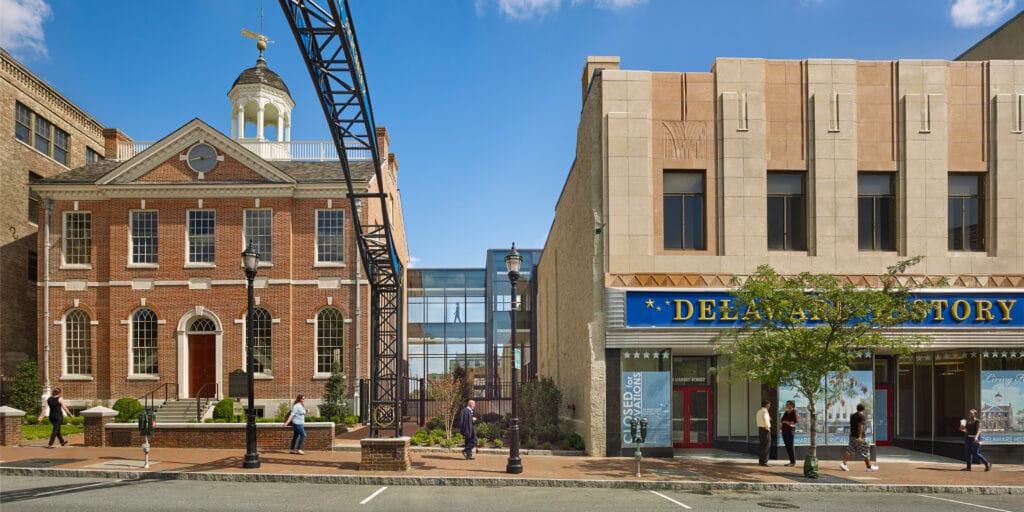
EDiS’ work with the Delaware Historical Society also reflects the importance of preserving historic assets while making them more functional for modern use. Projects such as the Coxe House renovation and exterior facade improvements required attention to historic details, existing conditions, and the long-term needs of the organization.
At Winterthur Museum, Garden & Library, EDiS has supported projects within a historic and culturally significant setting where construction must be carefully planned around artifacts, finishes, visitors, and the broader character of the property. This kind of work demands respect for both the physical structure and the mission of the institution it serves.
More recently, EDiS’ Advanced Modeling and Planning (AMP) team has supported work at Custom House, using tools such as laser scanning, drone documentation, and coordination modeling to help document existing historic conditions and coordinate new construction around them. These technologies are especially valuable in adaptive reuse because they help project teams better understand what is there before and during construction.
Building the Next Chapter
Adaptive reuse is about more than saving old buildings. It is about seeing potential where others may only see limitations. It requires creativity, patience, technical experience, and a team that understands how to work with the past instead of around it.
For owners considering the future of a historic building, the right construction partner can make all the difference. From early investigation and planning to coordination, construction, and closeout, EDiS brings the experience needed to help transform historic structures into spaces that are useful, beautiful, and meaningful for years to come.
By giving historic buildings a new purpose, communities can preserve the character that makes them unique while creating spaces that meet the needs of today and tomorrow.


