


Walk through the doors of a historic building and you sense it immediately — the weight of time embedded in plaster walls, worn hardwood floors, and hand-laid brick. But what you see on the surface rarely tells the whole story. Some of the most fascinating moments in historic renovation happen not at ribbon-cuttings or design reviews, but in the quiet seconds after a wall comes down and something unexpected stares back at you.
At EDiS, we’ve been building and rebuilding Delaware since 1908. From the stonemason roots of founder Ernesto DiSabatino to today’s complex construction management projects, one thing has remained constant: historic buildings never give up all their secrets without a fight. Here’s what we’ve learned to expect and how we’ve learned to adapt.
The Most Common Unexpected Conditions
Historic buildings were built by craftsmen who worked with the materials and knowledge of their era. That craftsmanship is often extraordinary, but it also means the building may predate modern standards for electrical, plumbing, fire suppression, and structural load. When our teams open a ceiling or expose a wall cavity, the surprises typically fall into a few categories:
- Outdated or hazardous materials: Asbestos insulation, lead paint, and older wiring systems are not unusual in buildings constructed before the mid-20th century. Identifying these early in the process — ideally during pre-construction — is critical to both worker safety and project scheduling.
- Undocumented structural elements: Original drawings, when they exist at all, often don’t reflect decades of modifications. Walls that appear non-load-bearing sometimes turn out to be carrying more than expected. Beams may be undersized by today’s codes, or over-engineered in ways that actually exceed modern requirements.
- Hidden architectural details: Perhaps the most exciting surprises. Behind a dropped ceiling or layers of drywall, historic ornamental details — original millwork, decorative tile, carved cornices — often lay dormant, waiting to be rediscovered.
Structural Issues Uncovered During Demolition
Demolition day in a historic building is always a moment of reckoning. Decades — sometimes centuries — of deferred maintenance, moisture infiltration, and building movement can hide behind a fresh coat of paint. Our teams treat every historic demolition as an investigation, not just a removal.
Moisture damage is among the most common structural discoveries: rotted sill plates, deteriorated masonry mortar, and compromised floor joists that have been slowly failing for years. In older brick buildings — common throughout Delaware’s Colonial and Federal-era commercial districts — the mortar itself can be as old as the building, lime-based and soft, no longer providing adequate bonding.
Foundation irregularities also surface frequently. Buildings that have settled unevenly over generations may show hairline cracks at corners, sloped floors, or doors that no longer close squarely. Addressing these conditions mid-project requires both structural expertise and a flexible schedule.
Historic Details Worth Preserving
Not every discovery is a problem to be solved. Some of the best moments in historic renovation are when a layer comes off and something beautiful appears that no one expected.
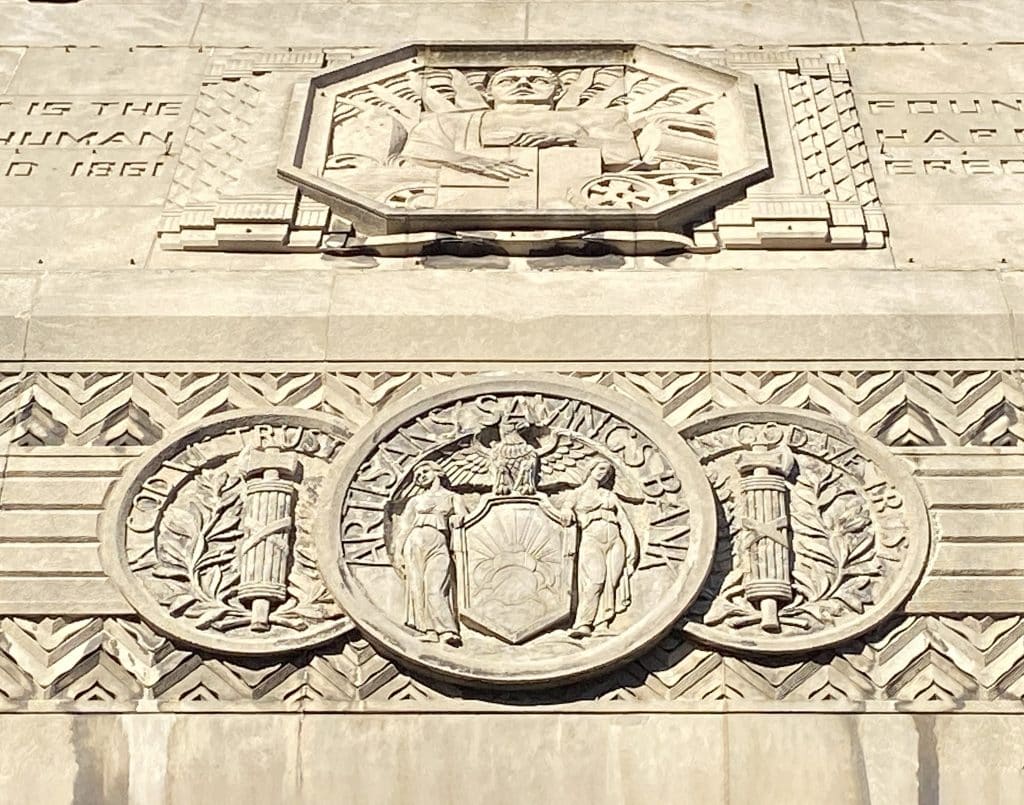
When EDiS worked with the Delaware Historical Society on their Annex building at 505 North Market Street in Wilmington, the team uncovered limestone medallions hidden beneath cement coverings on the building’s façade. Using historical photographs as a guide, the team carefully restored those medallions to their original appearance — a discovery that delighted passersby and drew community attention to a piece of Wilmington’s architectural heritage that had been invisible for decades.
Original wood floors, period-appropriate tile, hand-crafted millwork — these elements carry the character of a building that no modern reproduction can fully replicate. Wherever possible, our philosophy is to salvage first and replace only when necessary. In our work at the Hockessin Colored School #107 — now known as The Center for Diversity, Inclusion & Social Equity — original wood and tile were carefully salvaged and incorporated into the renovated design, preserving a physical connection to the building’s profound history.
How Teams Adapt When Conditions Change
In new construction, surprises are the exception. In historic renovation, they are part of the job description. The question is never whether something unexpected will happen — it’s whether your team is prepared to respond.
Effective adaptation starts before the project does. Thorough pre-construction investigation — probing, sampling, and reviewing every available historical record — reduces the number of surprises during construction. But no amount of pre-construction work eliminates uncertainty in a historic building entirely. The best teams build contingency into their schedules and budgets, maintain open lines of communication with owners and designers, and bring in specialty subcontractors who have experience matching historic materials and methods.
In our renovation and expansion of the Delaware History Museum at Old Town Hall in Wilmington — a 66,933-square-foot project connecting two historically significant structures — the complexity of working within and between buildings of different eras required constant coordination. Maintaining the existing archives in place throughout construction added another layer of precision to an already demanding project.
Delaware’s Historic Buildings Deserve Expert Stewardship
Delaware punches well above its weight when it comes to historic architecture. As the first state to ratify the U.S. Constitution, its buildings carry a particular national significance. Dover alone is home to a remarkable concentration of historic civic structures — from the Old State House on The Green, built between 1787 and 1791, to Legislative Hall directly across Legislative Mall.
Legislative Hall itself is a testament to Delaware’s commitment to honoring its past. Constructed between 1931 and 1933 in the Georgian Revival style using handmade brick, the building features an 18th-century style interior, murals depicting Delaware history, and portrait galleries of the state’s governors and military heroes. It has been expanded thoughtfully over the decades, with wings added in 1965–1970 and again in 1994, and the entire interior renovated across three phases in the mid-1990s.
Buildings like Legislative Hall are not merely functional spaces — they are living documents of who Delaware has been and who it aspires to be. Renovating them well requires more than construction expertise. It requires an understanding of history, a respect for craft, and the humility to let a building reveal itself on its own terms.
That is the work EDiS has been doing in Delaware for over a century. And it’s the work we look forward to continuing — one hidden surprise at a time.


