


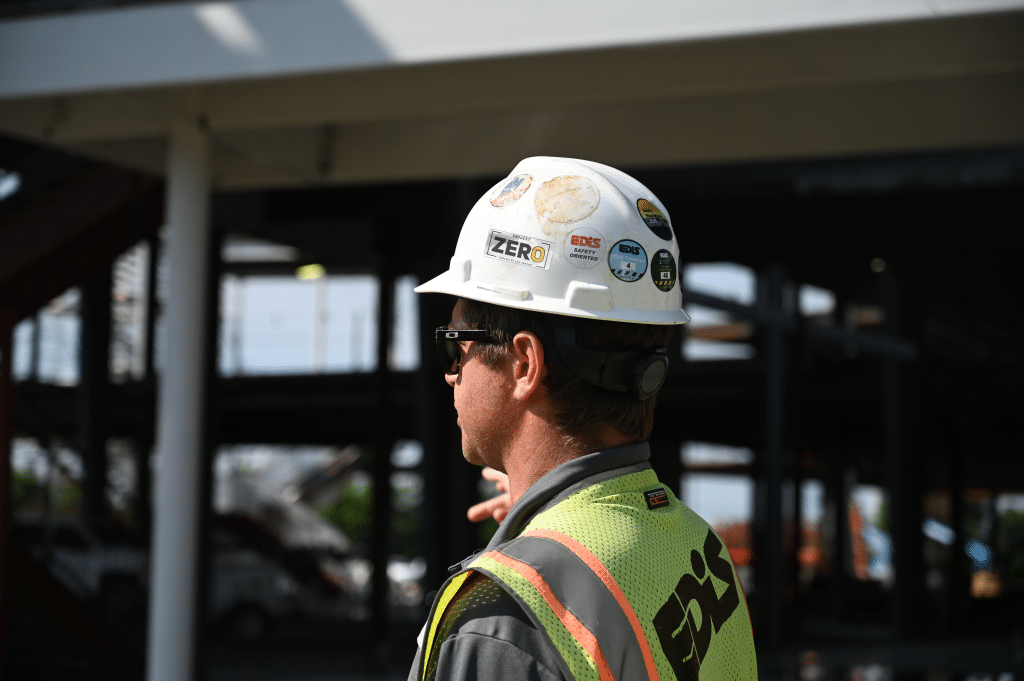
Summer has arrived, and with it comes a serious seasonal hazard that can impact us both in construction and at home: heat illness.
Heat-related illness can affect anyone. Despite what you may assume, it doesn’t only occur during extreme heat waves, and it doesn’t only affect people while they are working outside. Sudden increase in temperatures, high humidity, direct sun, physical activity, improper clothing, lack of hydration, and certain medications can all increase the risk of developing heat-related illness.
With temperatures rising again this week, take a few minutes to review the signs and symptoms – and what to do if you think someone may have heat exhaustion or heat stroke.
Understanding Heat Illness
Heat illness occurs when your body is no longer able to properly cool itself. Your body normally regulates temperature through circulation and sweating, but those systems become less effective as temperatures – and humidity – rise.
- In temperatures around 80 degrees, your body begins working harder to maintain a safe internal temperature.
- When the surrounding air reaches approximately 95 degrees or higher, most of your body’s normal cooling mechanisms become limited.
- At that point, your body relies heavily on evaporation through sweating, which may not be enough, especially during physical labor.
- As your body sends more blood to your skin to cool itself, less blood may be available to your organs, muscles, and brain.
- At the same time, your body loses fluids and electrolytes through sweat. If those fluids and electrolytes are not replaced, heat illness can progress quickly.
Types of Heat Illness
Heat illness can range from minor skin irritation to a life-threatening emergency. You can recognize the signs early and respond appropriately.
- Heat Rash: Heat rash occurs when your sweat glands become blocked, causing irritation and inflammation of the skin. You should keep the affected area dry, move to a cooler area when possible, and report symptoms before they worsen.
- Heat Cramps: Heat cramps are muscle spasms that can often affect your arms, legs, or stomach. They can occur during work, but can also occur after work, at night, or while resting. Cramps are often tied to heavy sweating and improper fluid replacement. Drinking only water during long periods of sweating may not replace sodium, potassium, calcium, and other electrolytes lost through sweat. Water is necessary, but during extended heat exposure, electrolyte replacement can also be important.
- Heat Exhaustion: Heat exhaustion is more serious than heat cramps and can occur when your body loses too much water and electrolytes. Symptoms may include:
- Headache
- Heavy sweating
- Dizziness
- Fatigue
- Nausea
- Cool, moist skin
- Weakness
- Rapid pulse
A person experiencing heat exhaustion should be moved to a cooler or shaded area, given fluids if they are alert and able to drink, and monitored closely. You should not try to dismiss or push through signs of heat exhaustion.
- Heat Stroke: Heat stroke is a medical emergency. It can be fatal if not treated promptly. Heat stroke occurs when your body can no longer control its internal temperature. In some cases, it can be mistaken for another medical issue, including a heart attack, which is why immediate emergency response is critical. Warning signs may include:
- High body temperature
- Confusion or altered behavior
- Loss of coordination
- Hot, red, flushed, or dry skin
- Heavy sweating or lack of sweating
- Seizure or collapse
If heat stroke is suspected, call 911 immediately. Do not wait to see if symptoms improve. While waiting for emergency medical help, move the person to a cooler area and begin cooling the body with cool water, ice packs, or other available cooling methods. Fast action can save a life.
Prevention Starts Before the Heat Becomes Extreme
The best way to address heat illness is to prevent it. That starts with planning the work or activity, watching the weather, and making sure everyone understands the signs of heat illness. Supervisors and workers – and friends and family – should pay attention to conditions and to each other.
Basic prevention steps include:
- Drink water regularly. Do not wait until you are thirsty.
- Replace electrolytes when sweating heavily. A practical guideline is to make water the priority while also adding electrolyte replacement during extended heat exposure.
- Acclimatize gradually. The body needs time to adjust to hot conditions, especially for new workers, returning workers, or anyone coming back from time away.
- Take frequent rest breaks. Breaks should be long enough to allow the body to recover.
- Avoid alcohol, excessive caffeine, and drinks high in sugar. These can contribute to dehydration.
- Eat lighter meals when working in hot conditions. Fruits, vegetables, and balanced meals can help the body manage heat better than heavy foods.
- Get proper rest. Fatigue increases risk. A worker who is already worn down is more vulnerable to heat illness.
- Review your medications with your doctor. Some prescriptions can increase the risk of heat stress or dehydration.
- Speak up early. Reporting symptoms early is not weakness. It is prevention.
At Work, Heat Safety Is a Team Responsibility
Heat illness can develop quickly, and a worker may not always recognize the symptoms in themselves, especially once confusion, fatigue, dizziness, or weakness begins. That is why it is important to check in on each other frequently throughout the day.
If someone you are working with looks disoriented, is sweating heavily or stops sweating, becomes weak, complains of nausea, or is not acting normally, take action. Move them out of the heat, notify supervision, and get medical help when needed.
But before that happens, remind each other to hydrate. Schedule rest breaks as part of the day. Heat illness is preventable, and prevention requires taking care of each other.


