


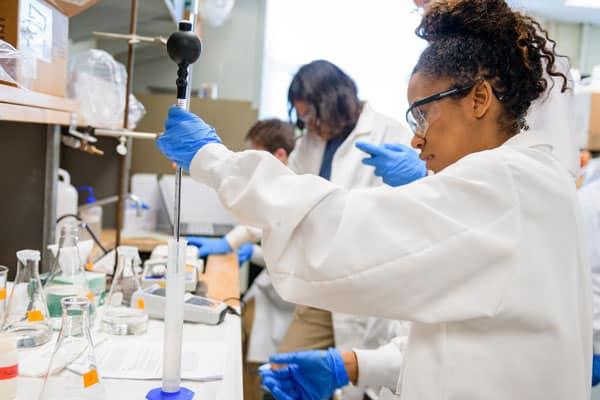
Renovating an active laboratory facility is fundamentally different from renovating a typical occupied building. In lab and life science environments, construction activity must coexist with ongoing research, sensitive equipment, strict environmental controls, and regulatory oversight. One misstep can disrupt experiments, compromise safety, or cause costly downtime.
At EDiS, we understand that in active labs, operational continuity is not optional—it’s mission critical. Successful renovations require deep planning, disciplined execution, and a construction partner who understands how labs truly function. Our approach is grounded in rigorous pre-planning and early collaboration with owners, designers, and end users to identify risks, phasing challenges, and operational constraints long before construction begins. Through detailed coordination, constructability reviews, and proactive communication, we help teams anticipate disruptions rather than react to them. This level of preparation and partnership is what consistently sets EDiS apart on complex, technically sensitive projects.
Here’s what owners and stakeholders should know before starting an active lab renovation—and how EDiS approaches these complex projects.
Why Renovations in Active Labs Are Uniquely Challenging
Active laboratories are high-risk, high-sensitivity environments. Unlike office or classroom renovations, labs often operate 24/7 and rely on tightly controlled conditions to support research integrity. Factors such as airflow, temperature, vibration, and cleanliness can directly impact outcomes.
Renovation work must be carefully coordinated to avoid interruptions to research schedules, damage to equipment, or exposure risks to occupants. This complexity demands a contractor with experience navigating live environments—not just building them.
Protecting an Active Laboratory/Facility During Construction
One of the top priorities in any occupied lab renovation is protecting ongoing research and the people conducting it. Dust, vibration, and contamination controls are managed through a combination of engineered barriers, negative air environments, HEPA filtration, and strict access protocols. At EDiS, we establish containment strategies early and monitor them continuously, adjusting as work progresses.
Environmental controls are equally critical. We closely coordinate construction activities with facility and lab managers to ensure temperature, humidity, pressure relationships, and air quality remain within acceptable ranges at all times. These controls are not static—they are actively managed throughout the project lifecycle.
Managing Shutdowns & Utility Tie-Ins
Planned shutdowns and utility tie-ins are often unavoidable in lab renovations, but how they are managed makes all the difference.
EDiS approaches shutdowns with step-by-step planning that begins months in advance. We work closely with owners, facilities teams, and lab users to identify acceptable windows, redundancies, and contingency plans. Every tie-in is sequenced, rehearsed, and documented to minimize duration and risk.
Clear, consistent communication with lab users is essential. Stakeholders know exactly what is happening, when it’s happening, and how it will affect their space—long before work begins. This transparency builds trust and prevents surprises.
Phased Construction & Temporary Systems
Keeping lab facilities operational during renovation often requires creative phasing and temporary infrastructure.
EDiS develops detailed phasing plans that allow work to proceed in controlled zones while adjacent spaces remain fully functional. When needed, we design and implement temporary systems—including power, HVAC, exhaust, or life-safety components—to maintain operations during critical transitions.
This approach allows owners to upgrade infrastructure without shutting down entire departments, preserving productivity and reducing long-term disruption.
Safety & Compliance Considerations
Lab renovations frequently involve hazardous materials, chemical storage, biological agents, and complex life-safety systems. Safety and compliance are embedded into every decision.
At EDiS, safety is a priority and working proactively with safety teams, regulatory agencies, and design partners to ensure all work meets applicable codes, standards, and institutional requirements. From hazardous material handling to fire protection system sequencing, our teams plan for compliance—not react to it.
The EDiS Approach to Occupied Lab Renovations
What truly differentiates EDiS is our approach to ownership and communication.
We establish clear communication protocols that keep all stakeholders informed and aligned—from researchers and facilities staff to designers and procurement teams. Issues are identified early, addressed collaboratively, and resolved with the end user in mind.
Our teams bring real-world experience, critical thinking, and foresight to every decision. We understand how today’s construction activity impacts tomorrow’s operations, and we plan accordingly. This proactive mindset allows us to minimize risk, protect research, and deliver successful outcomes in some of the most demanding environments.
Confidence Through Planning & Partnership
Renovating an active lab facility doesn’t have to mean disruption, uncertainty, or risk. With the right planning, the right team, and the right partner, it can be an opportunity to modernize infrastructure while maintaining momentum.
At EDiS, we bring confidence through preparation, collaboration, and execution—helping owners navigate complex lab renovations while protecting what matters most.


