


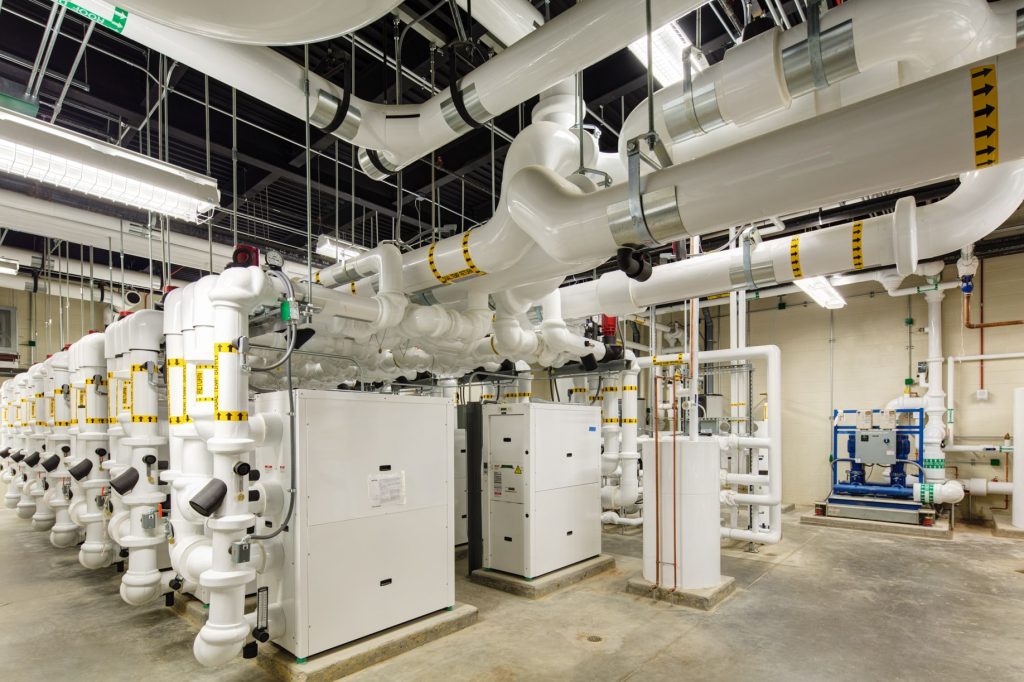
Modern laboratories are extraordinary environments. Behind every breakthrough, every experiment, and every controlled condition is a complex network of systems working quietly and continuously. In lab and life science facilities, success is not defined solely by architectural design or structural performance — it is driven by the Mechanical, Electrical, and Plumbing (MEP) systems that enable research to occur safely, reliably, and without interruption.
What Is MEP in Construction?
In construction, MEP refers to the integrated systems that make a building functional:
- Mechanical systems include HVAC (heating, ventilation, and air conditioning), laboratory exhaust, and environmental controls.
- Electrical systems provide power distribution, emergency backup, lighting, controls, and specialized equipment feeds.
- Plumbing systems manage water supply, drainage, waste, and specialty piping such as gases, purified water, and chemical lines.
In typical commercial buildings, these systems support occupant comfort and basic operations. In laboratories, MEP systems are fundamentally different. They regulate air quality, maintain pressurization, manage hazardous exhaust, deliver precise utilities, and protect sensitive research processes. Simply put, MEP systems are the operational backbone of any high-performance lab.
Why MEP Systems Are Mission-Critical in Labs
Laboratory MEP systems are far more complex than those in typical buildings because they directly support safety, research integrity, and equipment performance. Labs operate within strict environmental tolerances where airflow, temperature, humidity, pressure relationships, and utility stability must be carefully controlled. Even minor fluctuations can compromise experiments, damage sensitive equipment, disrupt operations, or create unsafe conditions. Unlike many building types, lab performance is inseparable from system performance.
Mechanical systems regulate ventilation, pressurization, and environmental conditions, electrical systems deliver reliable, uninterrupted power for critical equipment and data infrastructure, and plumbing systems provide specialized utilities such as laboratory gases, purified water, vacuum systems, and chemical waste management. Together, these systems form dense, highly coordinated environments where careful planning and precise installation are essential to ensure everything functions as intended.
Early MEP Planning & Trade Coordination
Successful lab projects begin long before systems are installed. Early planning is critical because laboratory MEP infrastructure is highly specialized and deeply interconnected. Bringing design teams, trade partners, equipment vendors, commissioning agents, and facility stakeholders together early allows everyone to align on performance requirements, system demands, and installation strategies. This collaboration helps teams make informed decisions to avoid costly adjustments later in the project.
Coordination is especially important in lab environments where ceilings, overhead spaces, and utility corridors must accommodate extensive ductwork, piping, cable trays, and controls. Without careful planning, conflicts between systems can quickly impact schedule and performance. Through detailed modeling and proactive coordination, potential clashes can be identified and resolved before construction begins. This approach reduces risk and helps ensure systems function as intended once the facility is operational.
The Value of Expert MEP Management
In laboratory and life science facilities, building performance is ultimately driven by system performance. Ventilation, power, utilities, and controls are not simply background elements — they are essential to safety, reliability, and research continuity. Thoughtful MEP planning and coordination help create stable environments, reduce risk, protect schedules, and support long-term operational success. In these highly technical spaces, the systems behind the walls are often the most critical components of the project. At EDiS, we understand that high-performance laboratories require precision, foresight, and disciplined execution — because when the systems perform flawlessly, science can too.


