


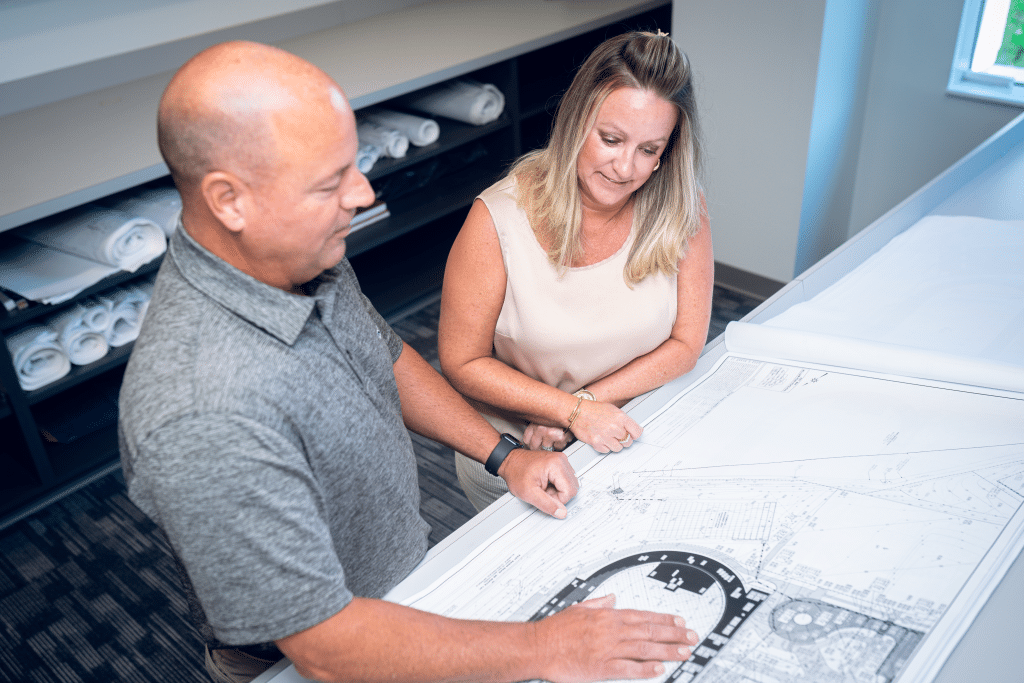
For K–12 schools, a successful construction project starts long before anyone arrives on site, breaks ground, or begins putting a building together. Estimating preconstruction are the backbone and foundation of a successful project. It is where the school’s vision begins to move from an idea into something that can be designed, budgeted, built, and ultimately lived in by students, faculty, and staff for decades to come.
That distinction matters. As the construction team, we eventually finish a project and move on to the next one. The school doesn’t. They’re going to live with the decisions made during design and construction every day.
That’s why our job during preconstruction is about much more than putting a number on a set of drawings. It is about understanding what the owner is trying to accomplish, helping translate that vision into a realistic plan, and giving school leadership the information they need to make good decisions before those decisions become expensive to change.
For schools working within defined budgets and non-negotiable academic calendars, that early preparation can make or break a project.
Estimating Is More Than Putting a Number on a Project
Anybody can add numbers together and come up with a total. Good estimating goes much deeper. As an estimator, you must build the project in your head before it ever exists in the field. You study the drawings, think through how the building will come together, identify what may be missing or unclear, and use experience, current market information, and input from the people who will ultimately perform the work to develop a number you can defend.
That’s particularly important for schools, where the budget often must serve many competing priorities. A new academic building, performing arts space, athletic facility, science lab, or campus renovation may begin with a long wish list. Part of preconstruction is helping the owner understand what that vision costs and where there may be opportunities to achieve the same goals differently.
A good estimate is not necessarily the lowest number. It is the right number. The one that gives the school a realistic understanding of what it will take to deliver the project they’re expecting.
Better Information Means Fewer Surprises
One of the greatest values of preconstruction is the opportunity to uncover challenges while there is still time to do something about them.
We approach every estimate by going through the drawings carefully rather than relying on assumptions from similar projects. We look at existing conditions, constructability, phasing, infrastructure, material requirements, labor conditions, and the overall sequence of construction. And when we don’t know something, we don’t guess.
We talk to our trade partners. We speak with project managers and superintendents who understand how the work will be performed. We discuss the estimate internally, double-check assumptions, and ask the simple but important question: What might we be missing?
Every estimate and every completed project also gives us another lesson we can bring to the next one. That collaboration helps uncover potential problems before construction begins, when the team still has the greatest ability to respond without affecting the budget or schedule.
Fiscal Responsibility Starts During Preconstruction
School boards and administrators are responsible for making sure construction dollars are spent wisely. Preconstruction gives them the information they need to fulfill that responsibility. Sometimes the project vision and the available budget don’t immediately align. That doesn’t necessarily mean sacrificing what matters most to the school.
Instead, it creates an opportunity for value management. The construction team can work alongside the architect, engineers, and owner to identify different materials, systems, or construction approaches that reduce cost while preserving the intended aesthetics, functionality, and overall experience of the building.
The key is understanding what the owner ultimately wants the project to accomplish. If we understand that vision early, we can help explore ways to get there without simply stripping things out of the project. The goal isn’t to redesign the architect’s work or compromise the school’s priorities. It’s to bring construction knowledge to the conversation and help the entire team find an achievable solution.
The Right Number Has to Account for the Real World
Estimating today also requires paying close attention to a construction market that changes much faster than it once did. Material pricing, wages, fuel, petroleum-based products, tariffs, supply disruptions, and even natural disasters can influence what a project will cost months or years from now.
Years ago, pricing might have been updated once or twice a year. Today, we’re continually reviewing market conditions and updating costs from one estimate to the next. That becomes especially important for schools because projects are often planned well before construction begins.
If we’re preparing an estimate today for a project that won’t be purchased or built for another year or two, we must understand where pricing may be headed, not simply what something costs today. That means considering escalation, long-lead materials, procurement timing, and market conditions early so the owner is working from a realistic financial picture.
Protecting the School Calendar
Cost is only one side of the equation. For schools, schedule can be just as important. Opening day is opening day. Whether a project needs to be completed before students return from summer vacation, phased around an occupied campus, or accomplished during a limited holiday break, the schedule often has very little flexibility.
Preconstruction gives the team the opportunity to identify long-lead items, think through construction sequencing, coordinate design decisions with procurement, and determine whether the proposed schedule can realistically be achieved. Those conversations are much better to have at the beginning of the project than several months into construction.
When schedule expectations, procurement strategies, and project phasing are understood early, everyone can move forward with much greater confidence.
Preconstruction Is a Collaborative Process
Estimating and preconstruction should never happen in a silo. Internally, our estimating team works closely with project managers and superintendents because they bring a different perspective to the estimate. They understand sequencing, field conditions, logistics, constructability, and the realities of building the work.
Externally, we collaborate with architects, engineers, consultants, trade partners, and—most importantly—the owner. Those relationships matter.
Strong trade partner relationships help us validate numbers and better understand what’s happening in the market. Collaboration with operations helps make sure what was estimated can be carried forward into construction. And ongoing conversations with school leadership help ensure that the decisions being made still support the original vision for the project.
That collaboration should continue after the estimate is complete. A strong handoff from estimating to operations means the people building the project understand not only the number, but how that number was developed, what assumptions were made, which trade partners were involved, and where potential risks or opportunities exist.
Preconstruction isn’t a separate step that disappears once construction begins. It becomes the roadmap for everything that follows.
Building Confidence Before We Build the Project
Some of the most important decisions on a construction project, especially K-12, happen before there is ever activity on the jobsite. When schools invest the time in thorough estimating and preconstruction, they gain a clearer understanding of cost, schedule, risk, constructability, and available options.
More importantly, they gain confidence.
The goal isn’t to promise that construction will never present a challenge. Every project will have challenges. The goal is to minimize the unknowns, identify risks early, and make sure the school and project team are prepared to respond when something does arise.
Because a successful project is not just about building what appears on a set of drawings. It starts with understanding the school’s vision, putting the right plan behind it, and doing everything we can from the very beginning to make sure that vision becomes reality.


