


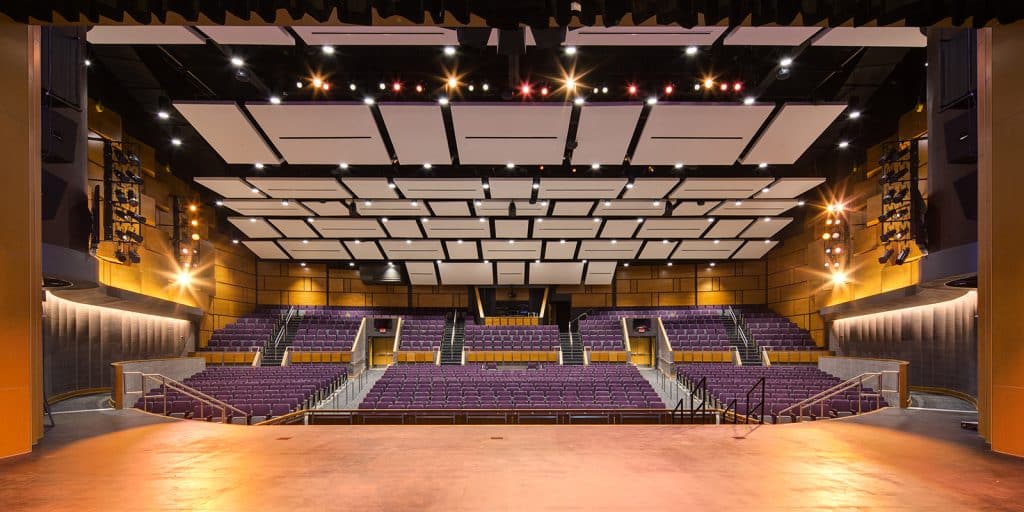
At first glance, renovating an existing building into a performing arts center might appear similar to other academic or institutional renovations. In reality, these projects require an entirely different level of technical planning. A theater is not simply a room with seating and a stage—it is a carefully engineered environment where acoustics, lighting, structure, and building systems must operate as a single, coordinated system.
When adaptive re-use involves an older building, the challenge becomes even more complex. The design team must transform a space that was never intended for performance—or one built for early-1900s productions with vastly different technical demands—into a venue capable of supporting modern productions, student rehearsals, and professional-quality audience experiences.
Successful performing arts renovations require more than architectural upgrades. They require a deep understanding of how performance spaces function.
Designing the Room Around Sound
In most buildings, acoustics are a secondary consideration. In a performing arts center, they are fundamental to how the space is designed.
The geometry of walls and ceilings, the materials used on surfaces, and the layout of seating all influence how sound travels through the room. Even the exterior envelope needs to be carefully reviewed and constructed in a manner that minimizes sound penetration. Especially when dealing with roofs, the best method is “the heavier the better” to ensure that sounds like rain do not travel through the envelope and affect performances. The goal is clarity—ensuring that spoken dialogue, musical performances, and subtle stage sounds can be heard evenly throughout the audience.
Even mechanical systems must be designed differently. Air distribution and return systems must operate quietly enough that they are never noticed during a performance. The audience should hear the actors and musicians—not the building. This is made even more difficult when dealing with an existing space to properly design and size the ductwork to eliminate ambient noise while working within the existing building structure and walls.
Achieving that balance requires coordination between acoustical consultants, architects, and mechanical engineers early in the design process.
The Structural Demands Above the Stage
Much of the complexity of a performing arts center exists in spaces that the audience never sees.
Above the stage and seating areas is often an intricate network of lighting grids, rigging infrastructure, catwalks, and suspended equipment. These systems allow lighting designers and stage crews to adjust equipment, change scenery, and maintain technology safely.
Unlike a traditional classroom or auditorium ceiling, this infrastructure requires careful structural planning. The building must support the weight of theatrical lighting fixtures, rigging systems, and other stage equipment while still allowing safe access for maintenance and adjustments. This starts with the selection of which type of rigging system to utilize: a manual, counterweight rigging system or a motorized rigging system. The selection of which affects many items on stage including the height of the fly space (area above the stage) since a manual rigging system requires a taller space versus a motorized system.
In adaptive re-use projects, this can mean reinforcing existing structural systems or carefully designing new support systems within the constraints of the existing building.
Integrating Lighting, Audio, and Technology
Modern performing arts facilities rely on sophisticated technical systems to support productions.
Rigging and lighting systems require extensive power distribution, control infrastructure, and mounting locations. Audio systems demand carefully positioned speakers, control rooms, and equipment racks. Behind the scenes, cable pathways and technology infrastructure must connect everything from stage lighting to sound mixing consoles.
These systems must be seamlessly integrated into the architecture of the building while remaining accessible for upgrades and maintenance as technology evolves.
In many cases, the infrastructure that supports these systems is just as important as the equipment itself.
Supporting the Performers Behind the Scenes
While audiences focus on the stage, performing arts centers must also function as working environments for performers and production teams.
Backstage areas—including dressing rooms, rehearsal spaces, storage areas for sets and props, and scene preparation areas—are essential to the daily use of the facility. These spaces must support rehearsals, production preparation, and educational programs that happen outside of public performances.
In adaptive re-use projects, incorporating these functions into an existing building requires thoughtful planning to ensure performers have the spaces they need without compromising the performance environment.
Training for Performance Readiness
Training is the final step in supporting the production teams. You can install the best, most intricate lighting and sound systems in the world but it is all for naught if the production team does not know how to properly utilize the equipment. This goes beyond just training on equipment however. Production teams must be taught proper methods of setting up area and personal microphones along with properly blocking scenes (precise staging of performers in relation to the stage) to ensure that the sound is being properly picked up and distributed to the audience. Improper blocking can prevent speech from being picked up clearly and, worse yet, may even cause microphone feedback.
Transforming Existing Buildings Into Performance Environments
Adaptive re-use projects offer a unique opportunity to transform existing buildings into vibrant spaces for arts education and community engagement. Historic or legacy structures often carry architectural character and campus history that cannot be replicated in new construction.
When carefully planned, these renovations allow institutions to preserve that character while introducing the infrastructure required for modern performances.
The result is more than a renovated building. It is a space intentionally designed to function as a true performing arts venue.
For schools and institutions investing in performing arts programs, these environments become lasting assets that support both student development and memorable audience experiences.


